What happens during a gunite pool build, stage by stage
A build looks chaotic from the kitchen window, but underneath it's an orderly sequence, and knowing the order takes the stress out.
October 27, 2026 · 3 min read
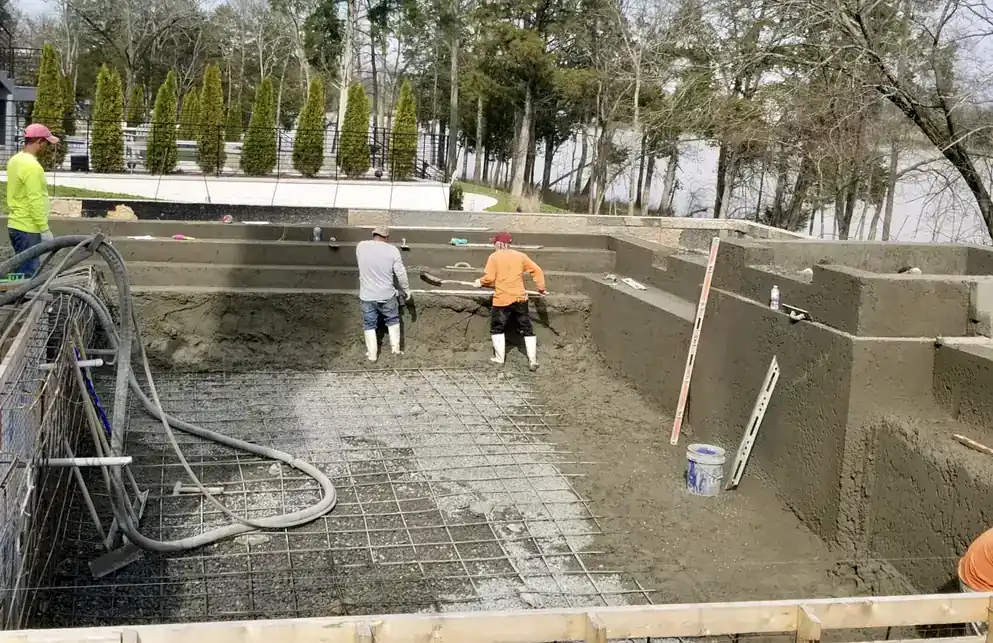
A gunite pool build looks chaotic from the kitchen window. Machines, mud, a pile of rebar, then one very loud day with a hose and a lot of concrete. Underneath, it's an orderly sequence, and knowing the order takes most of the stress out of it. Here's the run of it, start to finish.
Layout and excavation
Before any dirt moves, the pool outline gets marked on the ground, usually with paint and stakes, so you can walk the shape. This is your last cheap chance to change your mind. Nudge the pool a few feet, shift the steps, ask where the sun will sit at five in the afternoon. Changes here cost a conversation. Changes later cost concrete.
Then the excavator arrives. In Middle Tennessee that often means digging through clay and rock, and sometimes dealing with water that wants to collect in the hole after a storm. The crew cuts the depths, the shallow end, the spa and the benches. Expect noise, truck traffic and a yard that looks worse than it did yesterday. That's the process working.
Steel and plumbing
Next comes the skeleton. Crews tie a cage of rebar to the shape of the pool, and the plumbing for returns, drains, skimmers and any water features goes in alongside it. Electrical bonding and conduit for lights get planned at this stage too. It's the part of the pool nobody sees once it's finished, which is exactly why it's worth walking out and looking at it.
Your builder handles the paperwork and the inspections your city or county requires, and should tell you what's coming and when. Ask. A pool builder who can't explain the next step probably hasn't planned it.
Shooting the gunite
Gunite day is the big one. A hose carries a dry concrete mix to a nozzleman, who adds water at the tip and shoots it over the rebar, building the walls and floor up in layers. Other crew members trowel and trim the surface to the lines of the design. It's loud, fast and messy, and it's the moment a hole in the ground becomes a swimming pool.
After that the shell has to cure. Concrete gains strength by staying damp, so it gets wet down on a regular schedule rather than left to bake. Rush this and you invite surface cracking. This is the quiet stretch where it looks like nothing is happening. It's supposed to look that way.
Tile, coping and plaster
Once the shell has cured, the finish work starts. Waterline tile goes on, coping is set around the edge, and stonework for spillways, walls and waterfalls takes shape. Coping gets chosen early because it sets the look of the whole edge: flagstone, travertine, pavers or poured concrete all read very differently.
Plaster is the last coat inside, a cement-based surface troweled in one continuous push so it doesn't show seams. The pool is then filled promptly and steadily, not left half empty, and the new plaster gets brushed and chemically balanced through its first weeks. The start-up routine matters as much as the plaster itself.
With the pool full, the backyard finally starts to look like the plan. Pavers, a deck, a fire pit, an outdoor kitchen, lighting and plantings follow. Because all of it was drawn as one design, the pieces connect instead of looking tacked on.
Why the owners explain every step
One Franklin customer wrote that Kirk and Jody Goddard go out of their way to explain what's happening during construction and what to expect next, and called it a very cool experience to be part of. Another needed the pool built around the City of Franklin's guidelines on the type of concrete, which several other companies didn't want to deal with. Four Seasons got it done.
Here are questions worth asking at each stage, whoever you hire:
- Layout: Can I stand inside the marked shape and check the sun, the view and the foot traffic from the house?
- Steel: Can I see the rebar and plumbing before they're covered?
- Gunite: Which day is it happening, and what should I move out of the yard?
- Curing: What does the wetting schedule look like, and who is handling it?
- Plaster: What does the start-up routine look like, and what do I need to do each day?
If you're planning a pool and want to hear what each stage would look like on your lot, call Four Seasons Pool & Spa at (615) 219-5770 or use the contact page.
Four Seasons Pool & Spa, (615) 219-5770
Call (615) 219-5770More articles
Gunite, fiberglass or liner: choosing the right pool for a Middle Tennessee backyard
The material you pick decides which shapes are possible, how the pool gets into your yard, and what ownership feels like in year ten.
Planning a backyard you'll use in all four seasons
A pool carries the summer. Fire, shelter, a kitchen and warm water carry the rest of the year.